
Locations & Okanagan ·
Summer Production Planning in the Okanagan
Summer gives Okanagan productions long days and a wide range of locations. It also makes heat, smoke, road access and permits part of prep, not something to solve after call time.
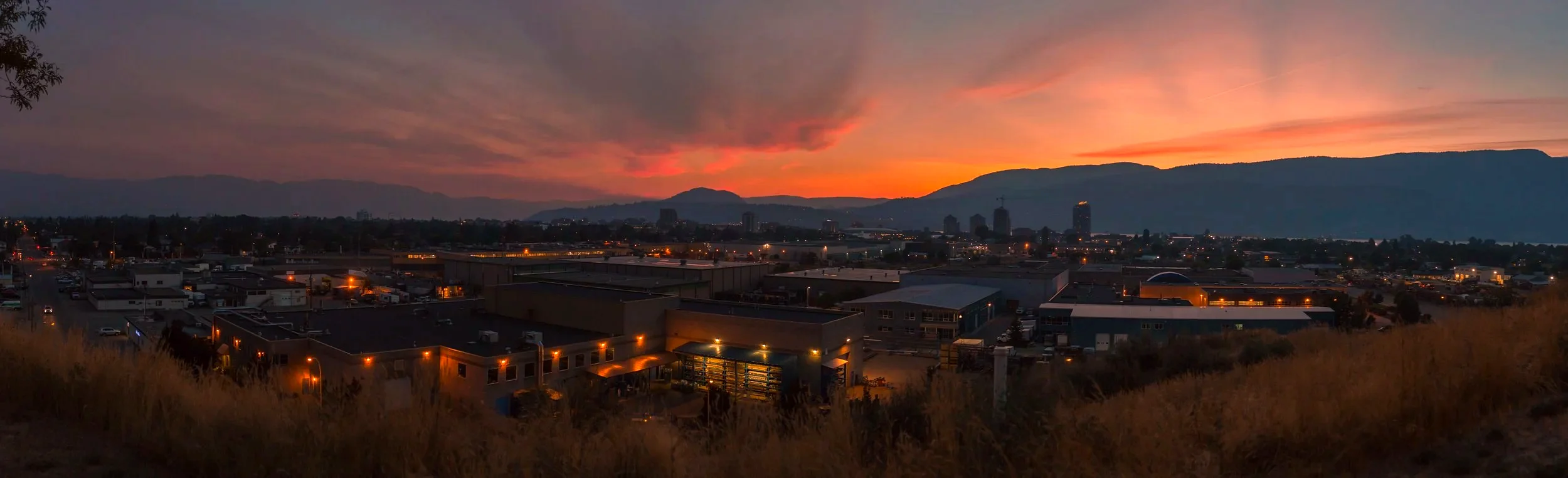
Check the day you are actually shooting.
The BC Wildfire Service summer outlook says drought in the Okanagan is likely to continue through the season, with fire activity expected to peak through July and August in the Central and Southern Interior. That does not make every exterior day unsafe. It does mean a scout photo and a forecast from last week are not enough to lock the plan.
Before the schedule is final, check the current BC wildfire situation and the Central Okanagan Air Quality Health Index. Check again before call time. The BlueSky Canada smoke forecast can add a useful short-range view, but it is an experimental model, not a guarantee. Decide in prep who can move the location, shorten an exterior block or pause the day if conditions change.
Treat heat as a schedule input.
Heat affects the crew before it affects the image. Earlier exterior calls, shade, cooling space, water, sensible work and rest periods, and a plan for people who are not acclimatized should be discussed before the call sheet goes out. WorkSafeBC's May 2026 heat-stress guide is the right starting point for identifying the risk and choosing controls.
The equipment plan needs shade too. Give batteries, monitors, camera carts and media a protected staging area, keep unnecessary vehicles out of the hottest holding pattern, and make sure the water and cooling plan travels when the crew moves. A location is not ready because it looks good at sunset; it has to support the people and equipment for the full working window.
Smoke changes health, continuity and the image.
Smoke can change quickly across the valley. It can affect breathing, visibility, distant backgrounds and the match between angles or shoot days. The response should follow current health guidance first. From there, production still has to decide whether the look, access and schedule can hold together.
A backup only helps if it has already been checked. Confirm the alternate location's permission, parking, sound, power, travel time and crew access before it becomes urgent. An interior, covered setup or tighter exterior plan may solve the day, but only when the needed equipment and approvals are part of the same decision.
Road access and permits need their own checks.
A clear location can still be a bad production choice if the route is delayed or closed. Use DriveBC for current incidents, planned events, road conditions and highway cameras, then test the company move with the actual vehicle and parking plan in mind.
For work on City property, review the City of Kelowna film and drone permit requirements early. Film and drone approvals are separate, and other municipalities, parks, private properties and land managers have their own requirements. A permit from one authority is not blanket permission for the region.
Put the fallback on the call sheet.
Name the latest go-or-no-go time, the person authorized to make the call, the alternate location or covered setup, and how the crew will be notified. Include the route, parking, shade, water, power and permit contacts that the fallback needs. That turns a vague weather backup into a plan the production can actually use.
If a visiting team needs local help testing an Okanagan location, route, permit path, crew or equipment plan, send KFS the brief, dates and location references. The earlier those checks happen, the more choices the production keeps.
Working on something similar?
Planning a location-heavy production in the Okanagan?
Send the brief, schedule, location reference or delivery requirement. KFS can help test the practical side before the day gets expensive.
Send the Brief